Children who love books before kindergarten tend to walk into school curious, confident and ready to learn. The best part is that building that love does not require expensive programs or drills. It grows from small, warm moments: a story before nap, a silly rhyme in the car, a trip to the library on a Saturday morning.
Our teachers in Casa Grande read with children every single day, from tiny infants to busy Pre-K students. Here are the habits that make the biggest difference, broken down by age, plus a few local resources worth knowing about.
Why Early Reading Matters So Much
The American Academy of Pediatrics encourages parents to read aloud to children starting in infancy. Long before a child can read words on a page, shared reading builds vocabulary, listening skills, attention span and the understanding that print carries meaning. It also builds connection. Snuggling up with a book tells your child that reading is a happy, safe thing to do together.
Early literacy is not about teaching a 3 year old to read. It is about laying the groundwork so that learning to read later feels natural instead of hard.
Reading With Babies (Birth to 12 Months)
Yes, even newborns benefit from books. Babies love the sound of your voice and high-contrast pictures. At this age, it is completely fine if your baby chews the book, turns pages randomly or only listens for a minute.
- Choose sturdy board books, cloth books and books with big, simple pictures or faces.
- Point to pictures and name them: "Look, a dog. The dog says woof."
- Sing nursery rhymes and lullabies. Rhythm and rhyme are early literacy too.
- Talk all day long. Narrate diaper changes, cooking and walks. Every word counts.
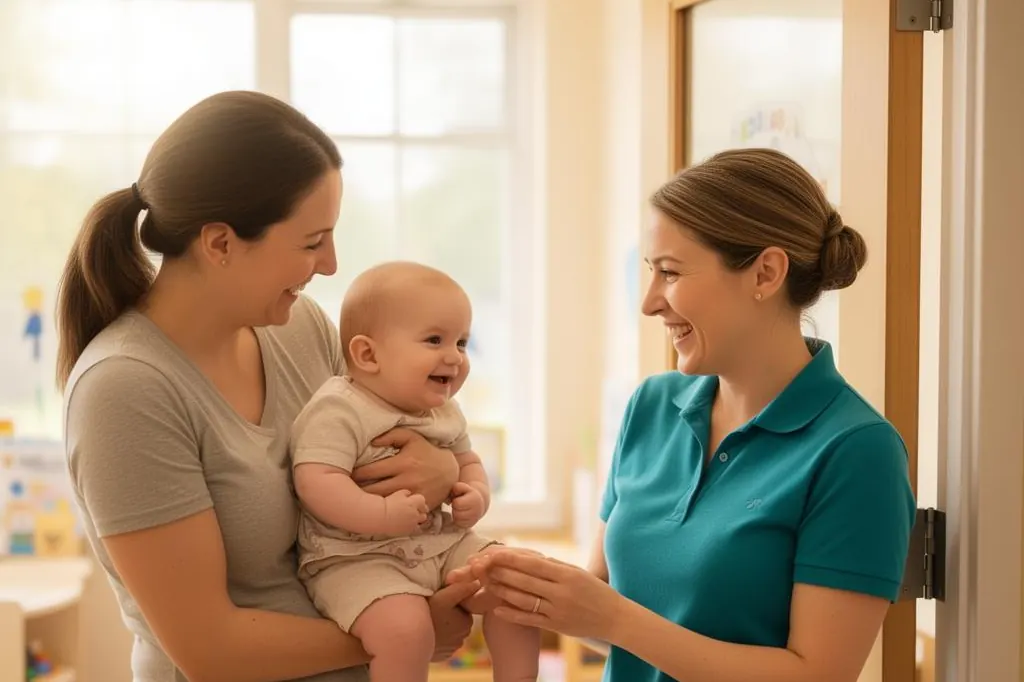
In our infant program, story time and songs are part of every day, along with plenty of one-on-one talk during feeding and play.
Reading With Toddlers (1 to 2 Years)
Toddlers are on the move, so story time may look a little chaotic. That is okay. Short, frequent reading beats one long session where everyone is frustrated.
- Pick books with repetition, like a phrase that comes back on every page. Toddlers love to chime in.
- Let your child turn the pages and choose the book, even if it is the same one for the tenth time.
- Ask simple questions: "Where is the ball?" or "What does the cow say?"
- Use books with flaps, textures and sounds to keep busy hands engaged.
- Act out the story with voices, animal sounds and big gestures.
Reading With Preschoolers (3 to 5 Years)
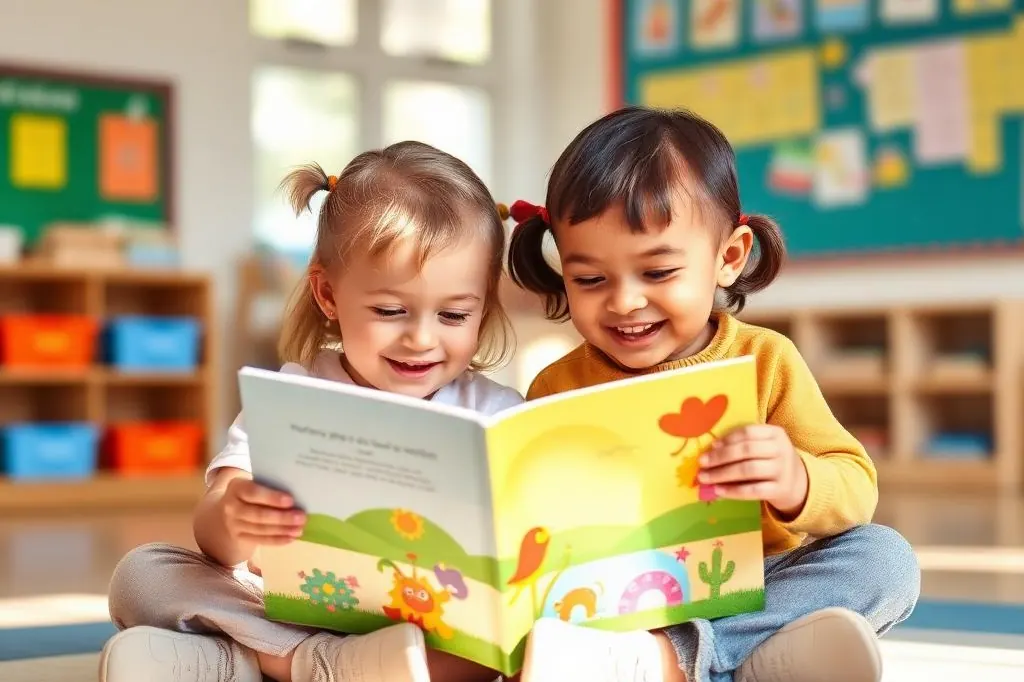
Preschoolers are ready for longer stories and real conversations about books. This is the age when you can start gently pointing out letters and sounds while keeping reading fun.
- Ask open-ended questions. "Why do you think she did that?" or "What would you do?" builds thinking and language.
- Predict and recall. Pause before turning a page to guess what happens next, then talk about the story afterward.
- Point to words as you read so children see that reading goes left to right.
- Play with sounds. Rhyming games and "I spy something that starts with B" build phonemic awareness, a key skill for learning to read.
- Spot letters everywhere. Point out letters from your child's name on signs, cereal boxes and license plates.
- Make your own books. Staple a few pages together and let your child draw a story while you write their words.
Our Threes and Pre-K classrooms build on these same skills with literacy centers, phonics and reading groups and morning journals. If you are curious how your child is tracking, our kindergarten readiness checklist covers the language skills teachers look for.
Create a Reading-Friendly Home
- Keep books within reach. A low shelf or a basket in the living room makes books part of everyday play.
- Make a cozy reading spot. A beanbag, a few pillows and a small lamp can turn any corner into a favorite place.
- Build reading into routines. Bedtime stories are classic, but books at breakfast, in the car or after daycare pickup work too.
- Rotate your collection. Swap books out every couple of weeks so there is always something that feels new.
- Let kids see you read. Children copy what they see. Reading your own book, magazine or recipe shows them reading matters.
- Limit background screens. A quieter home makes more room for conversation and books.
Free Reading Resources in Casa Grande
You do not need to buy a huge library to raise a reader. The Casa Grande Public Library offers free library cards and runs storytimes for young children at both the Main Library and the Vista Grande Library on Arizola Road. Storytimes usually include stories, songs, rhymes and play, and they are a wonderful way for little ones to practice sitting in a group before preschool. Check the library's online calendar for current times, since schedules change by season.
Library visits are also a great way to let your child choose their own books. Kids who pick their own stories are often far more excited to read them.
What If My Child Will Not Sit for a Story?
This is very common, especially with toddlers and active preschoolers. Try a few of these ideas:
- Read during snack or bath time, when your child is already sitting.
- Choose shorter books or simply talk about the pictures instead of reading every word.
- Let your child hold a toy or act out the story while you read.
- Follow their interests. Books about trucks, dinosaurs or animals often win over reluctant listeners.
- Keep it positive. Stop before it turns into a battle and try again later.
A Lifelong Gift Starts Today
Every story you share adds up. Ten minutes a day of reading together, singing and talking makes a real difference by the time your child walks into kindergarten. And the cuddles along the way are a pretty great bonus.
At Nanny's Daycare & Preschool, reading is part of every classroom, every day. If you would like to see how we build early literacy at each age, schedule a tour of our Casa Grande center or call (520) 421-1501. We would love to show you around.
Written by the teaching team at Nanny's Daycare & Preschool, a licensed child care center (ADHS license CDC-15619) at 306 E Cottonwood Ln, Casa Grande, AZ 85122. This article is general information and not medical advice.